
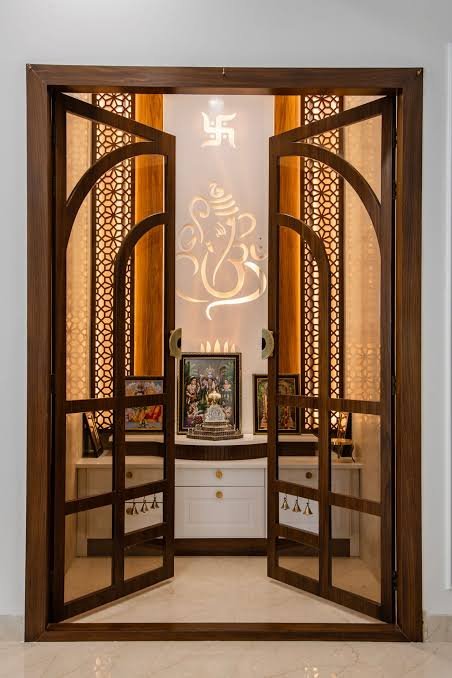
The pooja room is the calm heart of an Indian home. Its door sets the tone before anyone steps inside. A well-chosen door protects the space, adds beauty, and reflects your family’s values. Today, pooja room door designs range from carved teak panels to sleek glass screens. This guide explains the popular styles, materials, and practical tips. Use it to pick a door that suits your home and your daily rituals.
Why the Door Matters in Pooja Room Design
Good pooja room design starts with the entrance. The door frames the sacred space and defines how it feels. A closed door gives privacy during prayer. An open door invites family members to join. The door also keeps dust and cooking smells away from your idols and lamps.
Think about three things before you choose. First, check the size of your pooja space. Second, match the door to your home’s interior style. Third, decide how much visibility you want from the living area. These choices narrow your options quickly.
Wood Pooja Room Door Design: Timeless and Warm
Wood remains the most loved material for a pooja room. A wood pooja room door design brings warmth and a traditional feel. Teak, sheesham, and engineered wood are common choices. Teak offers rich grain and strong durability. Sheesham gives a deep, earthy tone. Engineered wood resists warping and suits tighter budgets.
Carved motifs add devotion to the design. Popular patterns include lotus petals, temple arches, and Om symbols. Brass bells and handles complete the look. Seasoned wood lasts longer, so ask your carpenter about moisture content before you buy. Apply a good polish or melamine finish to protect the surface from lamp smoke and incense.
Also Read-Cornice Design: A Complete Guide to Styles, Materials and Smart Ideas
Pooja Room Double Door Design for Larger Spaces
A pooja room double door design suits homes with a spacious prayer area. Two panels open wide and create a grand entrance. They also let more light and air reach the idols. Many families choose a swing style with matching panels. Others prefer a folding style that saves floor space.
Add a small half door or jaali at the lower section. This detail keeps pets and toddlers away from the altar. Make sure the hinges are sturdy, because double doors carry more weight. Fix a top latch so the panels stay aligned when closed.
Pooja Room Door CNC Design: Precision Meets Tradition
A pooja room door cnc design uses computer-guided cutting to carve detailed patterns. This method creates clean, repeatable motifs that hand carving rarely matches. You can choose floral jaali, geometric screens, or temple-inspired arches. The machine cuts thin lines with exact depth. That precision gives the door a refined, elegant finish.
CNC panels also let you personalise the pattern. You may add a deity outline, a mantra, or your family initials. Backlighting makes the cut pattern glow softly at night. Pair a CNC door with a wooden frame for a balanced, traditional look.
Modern Pooja Room Glass Door Designs
Modern pooja room glass door designs suit compact apartments and open layouts. Glass keeps the room visible while it separates it from the living area. This approach makes small homes feel bigger and brighter. Frosted glass offers gentle privacy without blocking light. Etched glass shows patterns such as mandalas, lotuses, or bells. Fluted glass adds texture and a subtle luxury feel.
A glass pooja room door looks best with slim frames in wood, brass, or black metal. Always choose toughened glass for safety. Clean the surface weekly to remove incense residue and fingerprints.
A glass pooja room door design also works well with mixed materials. Combine a wooden lower panel with a glass upper section. This pairing gives privacy near the floor and light near the top.
Latest Pooja Room Door Designs and Trends
The latest pooja room door designs blend heritage with clean lines. Homeowners now favour minimal carvings over heavy ornamentation. Slim brass inlays on dark wood look striking. Sliding doors gain popularity in tight corridors. Pocket doors disappear into the wall and free up space.
Warm LED strips around the frame add a soft glow. Neutral colours like walnut, ivory, and charcoal feel calm and modern. Arched openings and temple-style crowns also return with a modern twist. Designers pair them with simple jaali panels. Mix one bold detail with simple surroundings. That balance keeps the design elegant.
Pooja Room Decor Designs for Indian Homes
Pooja room decor designs for Indian homes should support the door, not compete with it. Pick a colour palette first. Then match the door finish with the wall panels, flooring, and ceiling. Marble or light stone flooring pairs well with wooden doors. Brass diyas, hanging bells, and a small mandir unit add devotion.
Traditional Vastu guidance often places the pooja room in the northeast corner. It also suggests avoiding spots under a staircase or beside a bathroom. Follow the tradition your family trusts, and adapt it to your floor plan.
Practical Tips Before You Finalise
Measure the opening twice before you order. Choose hardware that closes softly and quietly. Select brass or stainless steel fittings for long life. Keep diyas and agarbatti at a safe distance from the door. Ask for a sample panel to check the colour in daylight. Plan electrical points for lights early.
Compare your options clearly. Wood suits traditional homes. CNC suits families who want custom patterns. Glass suits compact flats. Hybrid doors give you both warmth and light. Intricate CNC work and solid teak usually raise the price, so set a clear budget first.
Final Thoughts
The right door turns a simple prayer corner into a serene sanctuary. Wood brings tradition, CNC adds precision, and glass adds light. Double doors bring grandeur to larger rooms. Think about your space, your family, and your daily rituals. Then pick the design that feels right. For more home and lifestyle reads, visit Factinindia for fresh updates.
Frequently Asked Questions
1. Which material is best for pooja room door designs?
Teak is the top choice for durability and rich grain. Sheesham offers a deep tone at a lower price. Engineered wood resists warping and suits tight budgets. Choose the material that fits your budget and home style.
2. Is a glass pooja room door suitable for small apartments?
Yes. A glass pooja room door design lets light pass through and makes compact homes feel larger. Frosted or etched glass adds privacy. Always pick toughened glass for safety.
3. What is a pooja room door CNC design?
A pooja room door CNC design uses computer-guided machines to cut detailed patterns into wood or panels. It delivers clean lines and exact depth. You can also personalise it with a deity outline or mantra.
4. When should I choose a pooja room double door design?
Choose double doors if your prayer area is spacious. Two panels create a grand entrance and let more air and light reach the idols. Folding panels work well if floor space is limited.
5. What are the latest pooja room door designs in 2026?
Homeowners now prefer minimal carvings, slim brass inlays, and sliding or pocket doors. Warm LED strips, arched openings, and mixed wood and glass panels are also popular. Neutral shades like walnut and ivory feel calm and modern.



[…] Also Read- Pooja Room Door Designs: Ideas to Match Every Indian Home […]