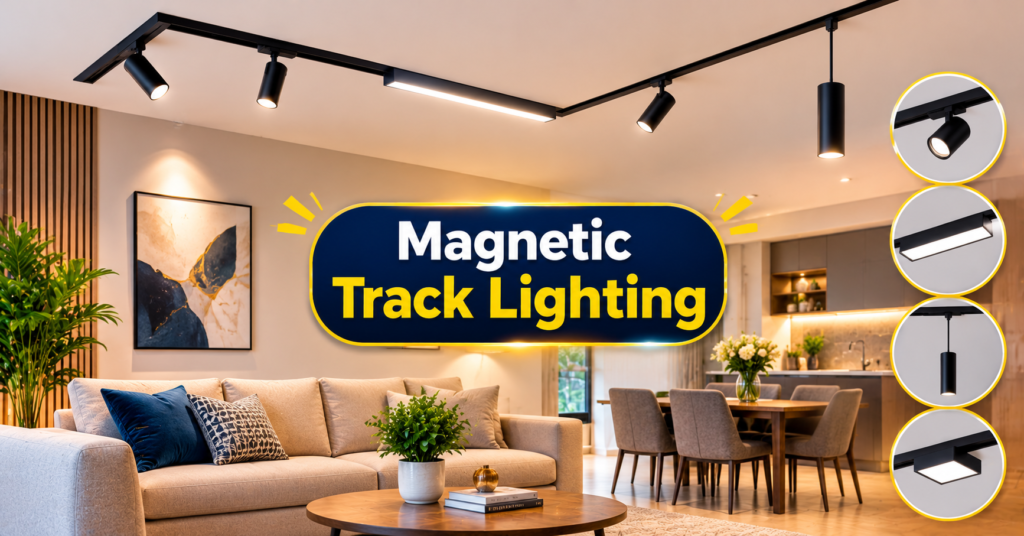
Lighting shapes how a home looks and feels, yet many families still rely on a few fixed ceiling points that cannot adapt to changing needs. Magnetic track lighting solves that problem. It uses a slim rail fixed into the ceiling or wall, and light fittings snap onto the rail with magnets, so you can move, add or remove them in seconds. The result is a clean, flexible and stylish way to light a living room, kitchen, study, passage or shop display. This guide explains how the technology works, the main design types, where to use it and what to check before you buy.
What Magnetic Track Lighting Actually Is
Magnetic track lighting is a low-voltage lighting arrangement built around a thin, recessed or surface-mounted rail. A magnetic track light attaches to the rail through a strong magnet, which also carries power to the fitting, so you do not need wires, screws or switches for every light. Most systems run on safe, low-voltage direct current supplied by a hidden driver, which makes the rail comfortable to handle and suitable for modern interiors. Because the rail stays slim and often sits flush with the ceiling, the lines of the room remain tidy, and only the lights themselves stand out as design features.
How the System Works
A complete magnetic track lighting system has four parts: the rail, the driver, the connectors and the light fittings. The driver converts household power into the low voltage the rail needs and usually hides above the ceiling or inside a cabinet. The rail carries current along its length, and connectors join straight sections, corners or T shapes into the layout you want. The fittings, which include spotlights, linear lights, pendants and flood lights, click onto the rail wherever you place them. Because the magnet holds each fitting in position and completes the circuit, you can slide a light along the track or swap it for another style without calling an electrician every time. Many systems also support dimmers and smart controls, so you can change brightness and mood from a switch or phone.
Key Benefits for Indian Homes
- Flexible layout: You can reposition lights as furniture, artwork or daily routines change, so one track serves many needs.
- Clean look: The slim rail avoids bulky fixtures and wiring, which helps small rooms and false ceilings look neat.
- Energy efficiency: An LED magnetic track light uses far less power than older halogen spots and produces little heat, which helps in warm climates.
- Layered lighting: You can combine accent, task and ambient lights on a single rail, instead of installing separate circuits.
- Easy upgrades: New fittings, colours and shapes snap onto the same rail, so you can refresh the room without major work.
- Safer handling: Low-voltage operation reduces the risk during adjustment, although a qualified electrician should still handle the main installation.
Popular Types and Designs
Magnetic LED track lighting comes in several designs, and each suits a different purpose. Choose the type based on how you use the space, not only on how it looks.
- Spotlights: Adjustable heads that aim light at artwork, shelves, plants or a feature wall. They create drama and depth.
- Linear lights: Slim bars that spread an even, soft glow. They work well over kitchen counters, study desks and long corridors.
- Pendant lights: Hanging fittings that clip onto the rail and drop above dining tables, islands or reading corners.
- Flood or wall washers: Wide-beam lights that wash light across a wall, lifting texture and making small rooms feel larger.
- Grid or panel lights: Flat, glare-free fittings that provide general light for offices, shops and open-plan areas.
- Recessed rails: Tracks that sit flush inside the ceiling for a minimal look, ideal for modern apartments.
- Surface-mounted rails: Tracks fixed on the ceiling or beams, which suit homes where a false ceiling is not possible.
- Suspended rails: Tracks hung by thin cables, which work in high-ceiling rooms and loft-style spaces.
Where to Use It, Room by Room
In the living room, a magnetic track lighting system can combine spots for wall art, linear lights for general glow and a dimmer for evening relaxation. Run the rail along the edge of the seating area rather than directly above it, so the light washes the wall and reduces glare on screens. In the kitchen, place linear fittings above the counters to light chopping and cooking zones, and add a pendant over the island or dining nook. In the bedroom, aim soft spots at the headboard wall and keep brightness low, because gentle light supports rest. In a study or home office, position the rail above and slightly in front of the desk, so shadows do not fall across your hands while you write. In hallways and passages, a straight rail with evenly spaced small spots guides movement and makes narrow spaces feel longer. Retail displays, boutiques and cafes also use these rails to highlight products, since moving a spotlight takes seconds.
Also Read- Kitchen False Ceiling Design: Practical Ideas, Materials and Planning Tips
Planning a Layout That Works
A good layout starts with how you use the room, not with the number of lights. Follow these steps:
- Measure the room and note the ceiling height. Mark the furniture, artwork and work zones.
- Decide the purpose of each zone. Choose ambient light for general use, task light for work and accent light for decoration.
- Position the rail. Keep it parallel to the longest wall or along the edge of the seating area. Avoid placing it directly above screens.
- Choose the number of fittings. Start with fewer lights, since you can always add more later.
- Plan the driver location. Keep it accessible for service, and check that the wire length from driver to rail matches your plan.
- Select dimming and controls. Dimmable fittings and smart switches add comfort and save energy.
Work with an electrician or designer who understands the system, especially when you plan a long run or a recessed rail inside a false ceiling.
Choosing the Right Light Quality
A good fitting does more than light the room, because colour and glare shape comfort. Check the colour temperature first. Warm white around 2700 to 3000 Kelvin suits living rooms and bedrooms, neutral white around 4000 Kelvin suits kitchens and study areas, and cool white suits offices and shops. Next, look at the colour rendering index, often written as CRI. A higher value, ideally above 80, shows food, fabrics and skin tones more naturally. Check the beam angle as well. Narrow beams highlight objects, and wide beams spread light across a wall. Finally, look for anti-glare design, such as deep recessed lenses, so the light does not strain your eyes.
What to Check Before You Buy
Many shoppers search for delta light magnetic track and similar premium options, but the right choice depends on your space, budget and use, not on a label. Compare the features that actually affect performance. Check the rail material, since aluminium rails resist warping and dissipate heat well. Check the driver quality and its power rating, so it can support all the lights you plan to add now and later. Confirm that the rail and fittings belong to the same system, because magnets, connectors and voltage must match. Ask about the warranty, spare parts and availability of extra fittings, which matter if you want to expand. Look at the finish, too, because black, white, brass and grey rails each change the mood of the room. Finally, buy from a seller who can guide installation and after-sales support.
Installation and Maintenance Tips
Installation depends on the rail type. A recessed rail needs a false ceiling or a channel cut into the ceiling, so plan it during interior work to avoid extra cost. A surface rail needs only a fixed base and clips, which makes it easier in finished homes. Always switch off the power before any work, and hire a licensed electrician for the driver connection. After installation, keep the rail clean with a dry, soft cloth, and wipe the lenses gently to remove dust. Avoid harsh chemicals that can damage finishes. Check the connectors occasionally, and keep spare fittings so you can replace a faulty light quickly.
Common Mistakes to Avoid
- Installing too many lights on a short rail, which causes glare and wastes power.
- Choosing a driver that cannot support future additions.
- Placing the rail directly above a television or sofa, where light bounces into your eyes.
- Mixing very different colour temperatures in the same room.
- Skipping dimmers, which reduces comfort and flexibility.
- Buying parts from different systems that do not connect properly.
Ready to plan magnetic track lighting that suits your home? Explore more practical interior design guides, room ideas and home styling tips at FactInIndia. Browse our latest articles and find simple, useful ideas to make every space feel comfortable, balanced and truly yours.
Frequently Asked Questions
1. What is magnetic track lighting?
It is a lighting system with a slim rail that carries low-voltage power. Fittings snap onto the rail with magnets, so you can move or change them easily.
2. Is an LED magnetic track light energy efficient?
Yes. LED fittings use much less electricity than older halogen spots and give off little heat, so they suit Indian homes.
3. Can I install a magnetic track lighting system myself?
You can clip on the fittings yourself, but a qualified electrician should install the rail, driver and wiring.
4. Does the track need a false ceiling?
Not always. Recessed rails work best with a false ceiling, but surface-mounted and suspended rails suit homes without one.
5. Can I dim magnetic LED track lighting?
Yes, if the driver and fittings support dimming. Many systems also work with smart controls.
6. How many lights can one track hold?
It depends on the driver’s power rating and the rail length. Check the maker’s guidance before you add more fittings.