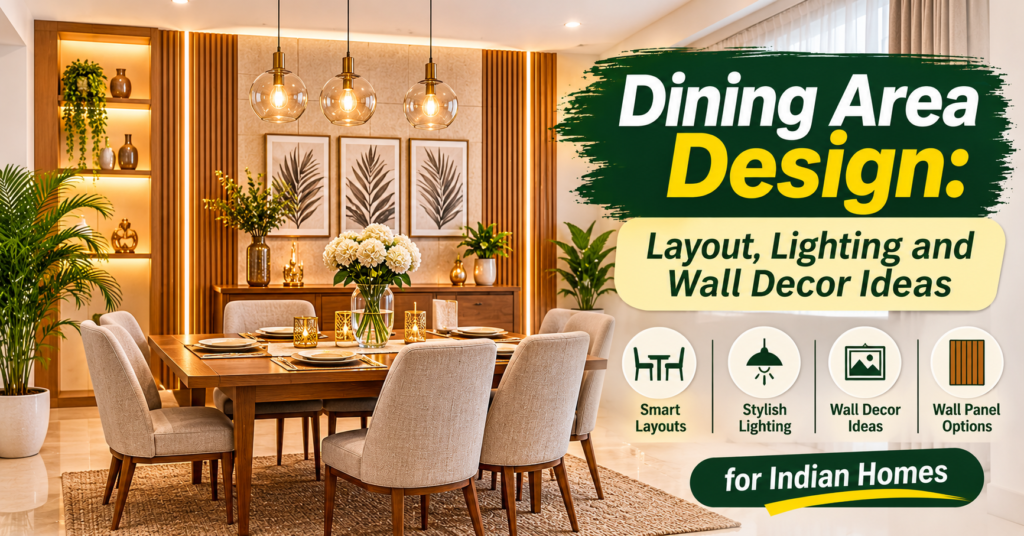
The dining space is where a home slows down. Families gather here for daily meals, festive feasts and long evening conversations, so the room needs to feel comfortable and look good at the same time. Good dining area design brings together layout, furniture, lighting, colour and wall styling into one balanced plan. This guide explains how to plan each element, which styles work best, and how to use wall decor to give your dining space character, whether you have a separate room or a compact corner in an open plan flat.
Start With the Space and the Way You Use It
Every strong dining area design begins with honest questions. How many people eat here on a normal day, and how many on festival days? Does the space also serve as a study corner, a homework spot or a place to work on a laptop? Is it a separate room, or does it share space with the living area and the kitchen? Your answers decide the table size, the seating style and the amount of storage you need. Measure the room carefully, mark doors, windows and walkways, and leave enough clearance around the table so people can pull out chairs and move freely. A cramped dining area feels stressful, even when the furniture looks beautiful.
Choose the Right Table and Seating
The table anchors the whole dining space, so choose its shape and size with care. Rectangular tables suit long rooms and larger families, round tables encourage conversation and fit well in square rooms, and square tables work in compact corners. Extendable tables give you flexibility, because you can keep them small on normal days and open them up for guests. Pick chairs that stay comfortable through a long meal, with supportive backs and easy to clean upholstery. Benches along one side save space and add a casual feel, while a mix of chairs and a bench makes the setting look relaxed and modern. Match the table material to your lifestyle. Solid wood feels warm and lasting, glass looks light in small rooms, and engineered surfaces resist stains and heat.
Popular Dining Area Layout Styles
- Separate dining room: A closed room with its own door gives privacy, suits formal meals and allows a statement chandelier and bold wall styling.
- Open plan dining: The table sits within the living or kitchen zone, so you use rugs, lighting and a defined wall to mark the area.
- Kitchen adjoining dining: A table or counter near the kitchen makes serving easy, and a small breakfast counter can add extra seats.
- Corner dining nook: A compact table with a built in bench and storage works well in small flats.
- Foldable or wall attached table: This option saves floor space and suits tiny apartments where the dining area must double as another room.
- Courtyard or balcony dining: Homes with a courtyard or wide balcony can create a relaxed, airy meal spot with plants and soft lighting.
Plan Lighting in Layers
Lighting changes how food looks and how the room feels. Use a central pendant or chandelier above the table as the main feature, and hang it low enough to create a cosy pool of light without blocking views across the table. Typically, the bottom of the fixture sits roughly 30 to 36 inches above the tabletop, and you can adjust that to suit your ceiling height. Add soft ambient light through recessed ceiling lights or wall washers, and include accent lights over a crockery unit or artwork. Choose warm white light for the dining space, since it makes food and faces look inviting. A dimmer is a smart addition, because you can brighten the room for cleaning and soften it for dinner.
Also Read- Pooja Room Door Designs: Styles, Materials and Planning Tips for Indian Homes
Colour Palette and Flooring
Colour sets the mood before anyone sits down. Warm neutrals such as cream, beige and soft terracotta feel welcoming, while deep greens and blues create a calm, elegant look. Light shades make small dining areas feel larger, and darker shades add drama in spacious rooms. Pick one dominant colour, one supporting colour and one accent, and repeat them across the furniture, curtains and wall decor. For flooring, choose materials that handle spills and heavy use, such as vitrified tiles, stone or wood look surfaces. A rug under the table defines the zone and adds softness, though you should choose a flat weave that does not trap crumbs and lets chairs slide easily.
Wall Decor That Makes the Room
Walls give a dining area its personality, and the right wall decor for dining room spaces can turn a plain room into a memorable one. Start by choosing a focal wall, usually the one that faces the entrance or sits behind the table. Keep the other walls simpler, so the focal wall stands out. Good area wall decor balances colour, texture and scale, so it never feels crowded. Here are the ideas that work best:
- Textured paint or limewash: A soft, layered finish adds depth without extra objects.
- Wallpaper: Botanical, geometric or abstract prints bring colour and pattern, and moisture resistant options suit dining areas near kitchens.
- Framed art or a gallery arrangement: A group of frames in matching tones makes a stylish display.
- Large mirror: A mirror reflects light and makes a small dining space feel larger.
- Wall mounted plates or woven baskets: These add a handcrafted, traditional touch.
- Floating shelves: Shelves hold crockery, plants and small decor pieces while keeping items within reach.
- Wall clock or sculptural pieces: One bold object can anchor the wall.
Wall Decor for Dining Room Area: Back Wall Ideas
The wall behind the table deserves special attention, since everyone sees it during every meal. For dining area back wall decoration, choose one strong idea and keep it clean. A wooden slat panel adds warmth and rhythm. A stone or tile feature wall gives a rich, textured backdrop. A mural or large painting creates instant drama, and a mirror framed in wood or metal brightens the room. Some families prefer a built in crockery unit with glass shutters and backlit shelves, which combines storage and display. Keep the scale in proportion with the table, and avoid hanging items too high. A good rule is to centre the main piece at eye level for a seated guest, so it feels connected to the table.
Dining Area Decor With Wall Panel
Wall panels are among the most popular ways to add depth and character. A dining area decor with wall panel approach works because panels hide uneven walls, add texture and can include lighting or storage. The common options include:
- Wooden or laminate slat panels: Vertical slats make the ceiling look taller and add a modern, warm feel.
- Fluted panels: Rounded grooves give a soft, premium look and catch light beautifully.
- Moulding or wainscot panels: Painted frames in raised patterns suit classic and transitional homes.
- Upholstered or fabric panels: Padded panels add comfort and absorb sound, which helps in echoing rooms.
- Stone look or marble finish panels: These bring a luxurious backdrop with less weight and effort than real stone.
- PVC or WPC panels: Moisture resistant and easy to clean, they suit dining areas near kitchens.
Add a thin LED strip behind or above a panel to create a gentle glow. Choose panel colours that match your furniture, because a wooden table looks best against a calm, lighter panel, while a pale table looks striking against a deeper shade.
Storage and Display
A tidy dining area looks better and works better. A crockery unit, sideboard or console table stores plates, glasses and serving dishes close to where you need them. Glass fronted cabinets let you show off your best crockery, while closed doors hide everyday items. A bar or tea corner on one side makes a lovely feature for homes that entertain often. Keep surfaces uncluttered, and display only a few well chosen pieces, such as a bowl of seasonal fruit, a vase or a brass tray. Matching storage finishes with the table or wall panels keeps the room visually calm.
Styling Details That Finish the Look
Small touches complete the picture. Add a runner or placemats in textures that suit your palette, and keep a centrepiece low so guests can see each other across the table. Fresh flowers, a small plant or a bowl of fruit brings life to the table. Curtains with soft, light fabrics frame windows and filter daylight gently. Indoor plants in corners add colour and freshness, while a few cushions on bench seating make it inviting. Keep the styling flexible, so you can switch the look for festivals with brass accents, flowers and extra lighting.
Small Dining Area Ideas
Compact homes need clever planning. Choose a round or drop leaf table to save space, and use armless chairs that slide fully under the table. Light colours, mirrors and glass tabletops make the area feel bigger. Go vertical with floating shelves and tall wall panels, so the floor stays open. A built in bench with storage underneath adds seating and hides clutter. Use one coordinated colour family across the walls, curtains and furniture, because it keeps a small room looking calm and connected to the rest of the home.
Common Mistakes to Avoid
- Buying a table that is too large for the room and blocks movement.
- Hanging a pendant too high or too low above the table.
- Using many competing patterns and colours on the same wall.
- Ignoring storage, which leads to clutter on every surface.
- Choosing wall finishes that stain easily in a room where food is served.
- Skipping a plan for lighting and power points before the interior work begins.
Ready to plan a dining area design that suits your home? Explore more practical interior design guides, room ideas and home styling tips at FactInIndia. Browse our latest articles and find simple, useful ideas to make every space feel comfortable, balanced and truly yours.
Frequently Asked Questions
1. What is the ideal size for a dining area?
It depends on your household, but allow at least three feet of clearance around the table so people can sit and move comfortably.
2. Which wall should I decorate in a dining area?
Choose the wall behind the table or the wall that faces the entrance, and keep the other walls simpler.
3. Are wall panels good for dining areas?
Yes. Panels add texture, hide uneven walls and can include lighting or storage. Choose moisture resistant, easy to clean materials near kitchens.
4. What colours suit a small dining area?
Light neutrals, soft pastels and warm whites make small spaces feel larger. Add one accent colour for personality.
5. How high should a dining pendant light hang?
Many designers suggest roughly 30 to 36 inches above the table, adjusted for your ceiling height.
6. Can I use a mirror in the dining area?
Yes. A mirror reflects light and adds depth, especially in compact rooms. Place it where it reflects a pleasant view, not clutter.