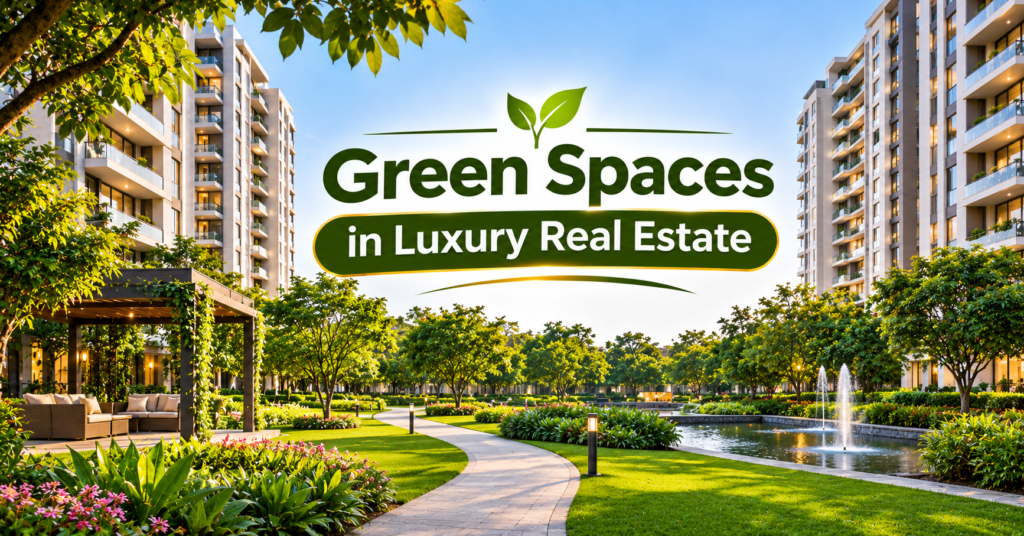
For years, luxury real estate meant a prime address, spacious rooms and premium fittings. Now buyers are looking beyond the four walls. As cities grow denser, trees, open lawns and walkable landscapes are becoming a key part of what makes a home feel upscale. A 2026 homebuying survey and developer comments show that green space is moving from a nice extra to a real deciding factor.
The Shift in What Buyers Want
The change is subtle but clear. Buyers still care about home size and finishes. But they increasingly weigh the neighbourhood and the environment around the building. Developers say a few planters and a small garden no longer impress. Shoppers want greenery, water features and open space built into the project’s overall plan.
Urban crowding explains much of this. In large cities, open space is scarce, so access to it feels like a privilege. Buyers who can afford premium homes are willing to pay for room to walk, breathe and relax within their own community.
What the Homebuying Survey Found
A 2026 survey by a property consultancy offers hard numbers. The report draws on around 1,800 respondents across more than 30 established and emerging residential markets. In gated housing societies, security and safety systems ranked as the most preferred amenities, followed by green and open spaces and community and lifestyle facilities.
That ranking matters. Green space comes second only to security. It outranks many popular amenities in gated communities. The report also found that unit size and layout, social infrastructure and connectivity were major considerations for roughly 75 to 80 per cent of respondents, according to reports. Buyers are judging the full living experience, not just the flat.
Survey Snapshot: Other Key Findings
- Purchase plans: Nearly half of respondents are willing to buy a home within two years.
- Sentiment: Buying sentiment stays firm for 54% of prospective buyers despite economic volatility.
- Price band: 46% prefer properties priced between ₹50 lakh and ₹1.5 crore.
- Home type: 62% prefer 2 and 3 BHK apartments.
- Younger buyers: Buyers under 30 prioritise fitness and wellness amenities at nearly double the overall average.
A caution is needed. The survey covers homebuyers broadly, with a large share in the mid-price range, not only luxury buyers. So the data shows a wider preference for greenery. The “luxury” link comes from developers and analysts, who say premium buyers are most vocal about it.
What Developers Are Saying
Industry voices back the trend. Hriday Desai, Chief Development Officer at Embassy Developments, said luxury buyers increasingly judge a home by the environment around it. He pointed to accessible open space, mature greenery, privacy and a healthier setting as growing priorities in dense cities.
He also argued that developers should plan landscaping from the start. In his view, greenery should be part of the masterplan, not an aesthetic layer added at the end. A landscape architect at another developer, Saumya Subhro Banerjee of Assetz, said the value of greenery lies in the experience it creates, not just the amount of green. These remarks come from the developers’ own statements, so they reflect industry views.
Beyond Pretty Gardens: What Good Green Design Looks Like
Designers say real green planning goes deeper than decoration. Useful features include:
- Tree canopies: Mature trees give shade and cool the surroundings.
- Shaded walking paths: Routes that residents can use comfortably in the Indian heat.
- Permeable surfaces: Ground that lets rainwater soak in instead of running off.
- Water-sensitive design: Ponds, swales and planting that manage water carefully.
- Biodiversity: Native plants that attract birds and insects.
- Everyday access: Green areas close to homes, not only at the far end of a project.
Why It Matters for Buyers and the Market
For buyers, greenery can improve daily life through shade, quiet and space for exercise or play. Research widely links access to nature with better wellbeing, though the effect varies by person and setting. For developers, green planning can become a selling point and a differentiator in a crowded market. It also raises costs, since land that stays open cannot be sold as built-up area, so projects with heavy greenery often carry higher prices.
For cities, nature-led projects can help with heat and drainage, at least within their own boundaries. They cannot replace public parks and city-level planning, though. Buyers should also watch for “greenwashing”, where marketing claims exceed what the project delivers.
How to Judge a Project’s Green Claims
- Check the masterplan: Ask for the landscape plan and the share of open area.
- Ask about tree maturity: Large, established trees differ from new saplings.
- Visit the site: Walk the paths and check shade, upkeep and access.
- Look at maintenance plans: Green spaces need regular care and budgets.
- Verify approvals: Check that stated features match approved plans.
What Comes Next
- More nature-led launches: Developers are likely to market greenery and open areas more strongly.
- Higher expectations: Buyers will ask tougher questions about how green features are planned and maintained.
- Policy and regulation: Local building rules may shape how much open space projects must provide.
- Cost pressures: Land prices and affordability will limit how many projects can offer large green areas.
Quick Answers on Green Spaces and Luxury Homes
Why are green spaces important to homebuyers?
Dense cities have little open space, so greenery offers shade, calm and room to move.
What is the top amenity in gated communities?
Security and safety systems, followed by green and open spaces, according to the 2026 survey.
Does the survey cover only luxury buyers?
No. It covers homebuyers broadly, with many in mid-price ranges.
What makes green design “good”?
Tree canopies, shaded paths, permeable surfaces, water-sensitive planning and biodiversity, planned from the start.
Do green projects cost more?
Often yes, because open land cannot be sold as built-up space.
How can I check a project’s green claims?
Ask for the masterplan, visit the site and verify approvals.