
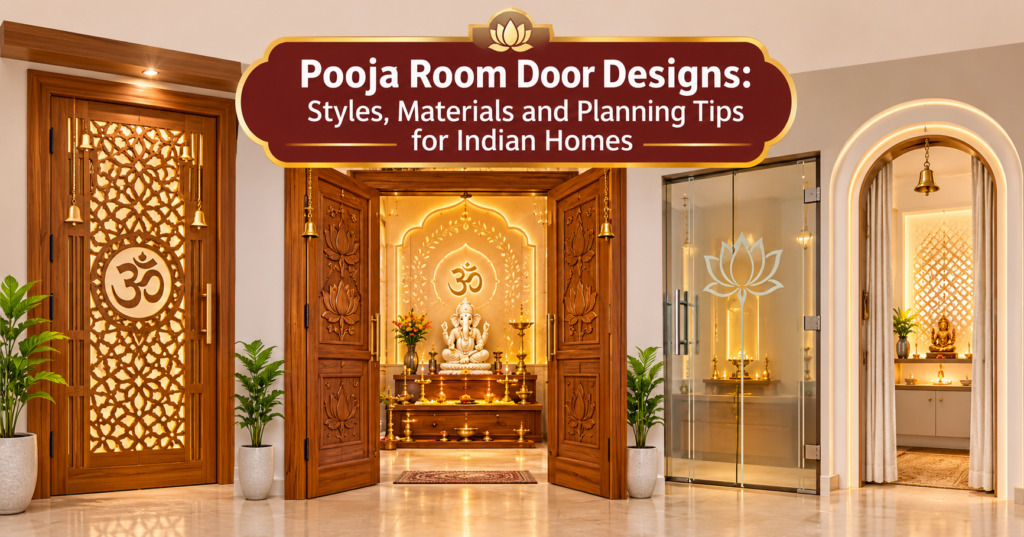
The pooja room is the calmest corner of an Indian home, and its door sets the tone before anyone steps inside. A well-chosen door protects the space, frames the altar, and reflects your family’s taste and traditions. Today, pooja room door designs range from carved teak panels to sleek glass screens and precise CNC patterns. This guide explains the main styles, materials and layout choices, so you can pick a door that suits your home, your budget and your daily rituals.
Why the Door Deserves Careful Thought
A pooja room door does far more than open and close. It creates a boundary between everyday activity and quiet prayer, keeps dust and cooking smells away from idols and lamps, and gives you privacy during rituals. It also shapes the first impression of the space. A heavy carved door feels traditional and grand, while a light glass door feels open and contemporary. Good pooja room design begins with the entrance, because the door sets the mood for everything inside. Before you choose, think about your space, your interior style, and how much visibility you want from the living area.
Wood Pooja Room Door Design: Warm and Timeless
Wood remains the most loved material for a pooja room, and a wood pooja room door design brings warmth that other materials rarely match. Teak offers rich grain and strong durability, sheesham gives a deep earthy tone, and engineered wood resists warping at a friendlier price. Carved motifs add devotion to the door. Popular patterns include lotus petals, temple arches, kalash shapes and Om symbols, and brass bells, handles or inlays complete the look. Ask your carpenter about moisture content before you buy, because well-seasoned wood lasts longer. Finish the surface with a good polish or melamine coat, since lamp smoke and incense can darken and stain unprotected timber over time.
Pooja Room Double Door Design for Larger Spaces
A pooja room double door design suits homes with a spacious prayer area or a dedicated prayer room. Two panels open wide and create a grand entrance, and they let more light and fresh air reach the idols. Swing doors with matching panels give a classic look, while folding doors save floor space in tighter layouts. Many families add a small half door or jaali panel at the lower section, which keeps pets and toddlers away from the altar while letting air flow. Double doors carry more weight, so choose sturdy hinges and fix a top latch to keep the panels aligned. A neat door frame with a carved crown, or toran-style top, also adds a festive touch.
Pooja Room Door CNC Design: Precision Meets Tradition
A pooja room door cnc design uses computer-guided cutting to carve detailed patterns into wood, MDF or other panels. The machine cuts thin lines at exact depth, so the result looks sharper and more consistent than many hand-carved designs. You can choose floral jaali, geometric screens, temple outlines or mandala patterns. CNC also lets you personalise the door with a deity outline, a mantra or a family symbol. Backlighting a cut panel creates a soft glow at night, and a wooden frame around the panel keeps the look warm and traditional. When you order, ask for a sample of the pattern, and check that the finish seals the cut edges, since fine cuts collect dust and need regular cleaning.
Also Read- Magnetic Track Lighting: A Complete Guide to Flexible, Modern Home Lighting
Modern Pooja Room Glass Door Designs for Compact Homes
Modern pooja room glass door designs suit apartments and open layouts, where heavy doors can make a small space feel crowded. A glass pooja room door design keeps the altar visible while it separates the prayer area from the living room, so the home feels larger and brighter. Frosted glass offers privacy without blocking light, etched glass carries patterns such as lotuses and mandalas, and fluted glass adds texture. Slim frames in wood, brass or black metal look elegant. Always choose toughened glass for safety, and clean the surface weekly to remove incense residue and fingerprints. A popular compromise combines a wooden lower panel with a glass upper section, which gives privacy near the floor and light near the top.
Latest Pooja Room Door Designs and Trends
The latest pooja room door designs blend heritage with clean lines. Homeowners now favour minimal carvings over heavy ornamentation, and slim brass inlays on dark wood look striking. Sliding doors are popular in narrow corridors, and pocket doors that slide into the wall save even more space. Warm LED strips around the frame add a gentle glow, while neutral colours such as walnut, ivory and charcoal create a calm mood. Arched openings and temple-style crowns have returned with a modern twist, often paired with simple jaali panels. The best approach is to choose one bold detail, such as a carved panel or a brass handle, and keep the rest of the surroundings simple.
Popular Design Types at a Glance
- Carved wooden door: Traditional panels with lotus, kalash or temple motifs, ideal for classic homes.
- Double door with jaali: Two panels with perforated sections for airflow and a grand look.
- CNC cut panel door: Precise patterns, easy to personalise with symbols or mantras.
- Frosted or etched glass door: Bright and modern, with privacy and decorative patterns.
- Wood and glass combination: Solid lower panel with a glass top for balance.
- Sliding or pocket door: Space-saving choice for small apartments and narrow passages.
- Arched or temple-style entrance: A crown or arch that frames the door like a mini mandir.
- Open entrance with curtain or toran: A simple, light option for compact prayer corners.
Matching the Door with Pooja Room Decor
Pooja room decor designs for Indian homes work best when the door, walls, flooring and mandir unit follow one palette. Wooden doors pair well with marble or light stone flooring and warm wall panels. Glass doors suit white or pastel walls, backlit niches and slim shelving. Brass diyas, hanging bells and a small ceiling light add devotion without crowding the room. Keep the door finish consistent with the mandir, so the whole space feels planned rather than assembled. If the room is small, choose light colours and limit the ornaments, because a clutter-free prayer area feels calmer and easier to maintain.
Size, Placement and Vastu Basics
Plan the door size before you pick the design. A standard internal door height suits most pooja rooms, but a slightly smaller, elegant door can work well for a prayer corner. Measure the opening twice and check the clearance for the swing, because a door that bumps into furniture will annoy you daily. Many families follow traditional Vastu guidance, which often favours the northeast corner for the pooja room and suggests avoiding spots beneath a staircase or beside a bathroom. Treat these as traditional guidelines, follow the ones your family trusts, and adapt them to your floor plan. Good ventilation and natural light also matter, whatever the direction.
Hardware, Finish and Maintenance
Hardware affects both looks and comfort. Choose brass or stainless steel handles, soft-close hinges and a sturdy latch that closes quietly. Select a finish that resists oil, soot and moisture, such as melamine, PU or a good lacquer, and apply it evenly on both sides of the door. Wipe wooden doors weekly with a soft, dry cloth, and polish them once or twice a year. Keep diyas, agarbatti and camphor at a safe distance from the door, since open flames and heat can damage the finish. Clean glass with a soft cloth and a mild cleaner, and avoid harsh chemicals on carved or painted surfaces.
Common Mistakes to Avoid
- Choosing an overly heavy door for a very small prayer corner.
- Using untreated wood that can warp or darken quickly.
- Ignoring ventilation, which leads to stuffy air and soot build-up.
- Mixing too many patterns or finishes in one small space.
- Skipping a sample check for CNC patterns and glass finishes.
- Placing flames too close to the door.
Ready to plan pooja room door designs that suit your home? Explore more practical interior design guides, room ideas and home styling tips at FactInIndia. Browse our latest articles and find simple, useful ideas to make every space feel comfortable, balanced and truly yours.
Frequently Asked Questions
1. Which material is best for pooja room door designs?
Teak is a top choice for durability and rich grain, while sheesham and engineered wood offer good value. Glass and CNC panels suit modern homes.
2. Is a glass pooja room door suitable for small flats?
Yes. Frosted or etched glass lets light pass through, keeps the space bright and still gives privacy. Always use toughened glass.
3. What is a pooja room door CNC design?
It is a pattern cut into a panel by a computer-guided machine, which creates precise jaali, floral or temple motifs that you can personalise.
4. When should I choose double doors for a pooja room?
Choose them when you have a larger prayer area and want a grand entrance, better airflow and more light.
5. How do I keep a wooden pooja room door in good shape?
Wipe it weekly, polish it once or twice a year, and keep flames and moisture away from the surface.
6. Which direction is best for a pooja room?
Traditional Vastu guidance often prefers the northeast. Follow the tradition your family trusts and adapt it to your layout.


