

A fabric wall panel is one of the most effective ways to add warmth, texture and personality to a room without a major renovation. Homeowners across India are moving away from flat paint and plain wallpaper, and they are choosing soft, tactile surfaces that look premium and also solve practical problems like echo and noise. A single feature wall wrapped in fabric can change the entire mood of a living room, bedroom, home theatre or office. This guide explains what a fabric wall panel is, how it works, which types suit different spaces, and how you can install or even make one yourself.
What Is a Fabric Wall Panel?
A fabric wall panel is a decorative and functional wall covering built from a rigid or semi-rigid core, usually foam, fibreboard, mineral wool or a wooden frame, which is wrapped in a stretched textile. The fabric can be linen, cotton blend, velvet, suede, jacquard or a performance polyester. Installers fix the panel to the wall with adhesives, screws or concealed hooks, and the result is a seamless, upholstered look that feels very different from a painted surface. Because the core sits between the fabric and the wall, the panel also absorbs sound, softens reflections and adds a thin layer of insulation. This combination of beauty and performance explains why designers specify fabric wall panels in luxury homes, boutique hotels, studios and corporate offices alike.
Key Benefits of a Fabric Wall Panel
Fabric panels deliver value in several ways, and understanding them helps you decide where to use them.
- Better acoustics: The soft core and textile trap sound waves, which reduces echo and keeps conversations, music and television audio clear. This benefit matters most in open plan apartments with hard flooring.
- Rich texture and colour: Fabric adds depth that paint cannot match. You can choose from hundreds of shades, weaves and patterns to match your furniture and lighting.
- Concealed wall flaws: The panel covers hairline cracks, uneven plaster and minor dampness marks, so you spend less on surface preparation.
- Thermal comfort: The padded layer slows heat transfer, which helps rooms feel slightly cooler in summer and warmer in winter.
- Easy updates: Modular panels can be removed and replaced, so you can refresh the look every few years without repainting.
- Premium appearance: An upholstered wall instantly signals quality and craftsmanship, which raises the perceived value of the whole interior.
Popular Types of Fabric Wall Panels
The market offers many formats, and each one suits a specific purpose. Here are the main types you should consider.
- Acoustic fabric panels: These use dense mineral wool or high-density foam behind the textile. They work best in home theatres, music rooms, conference rooms and podcasting corners where sound control is the priority.
- Padded upholstered panels: These feature a thick foam layer and often use tufting or channel stitching. They create a luxurious headboard effect and look stunning behind beds and sofas.
- Stretched fabric systems: Installers fix a lightweight frame to the wall and stretch the textile across it, which produces a smooth, tailored surface with crisp edges.
- Decorative fabric wall panels: These focus on visual impact. Designers use bold prints, metallic threads, embroidered fabrics and geometric layouts to turn a plain wall into a statement piece.
- Fabric wall art panels: These are framed or canvas-mounted textile pieces that behave like artwork. You can hang a single large piece or group several panels in a gallery arrangement to add colour without covering the whole wall.
- Fabricated wall panels: These are factory-made units, cut and finished to exact dimensions in a workshop, which guarantees consistent quality and quick installation on site. Fabricated wall panels also let you combine fabric with wood, metal or leather trims for a custom finish.
Also read- Kitchen Budgets Under Pressure: Home-Cooked Veg Thali Cost Hits Rs 30.8 as Onion Prices Jump 89%
Fabric Wall Paneling Designs That Transform a Room
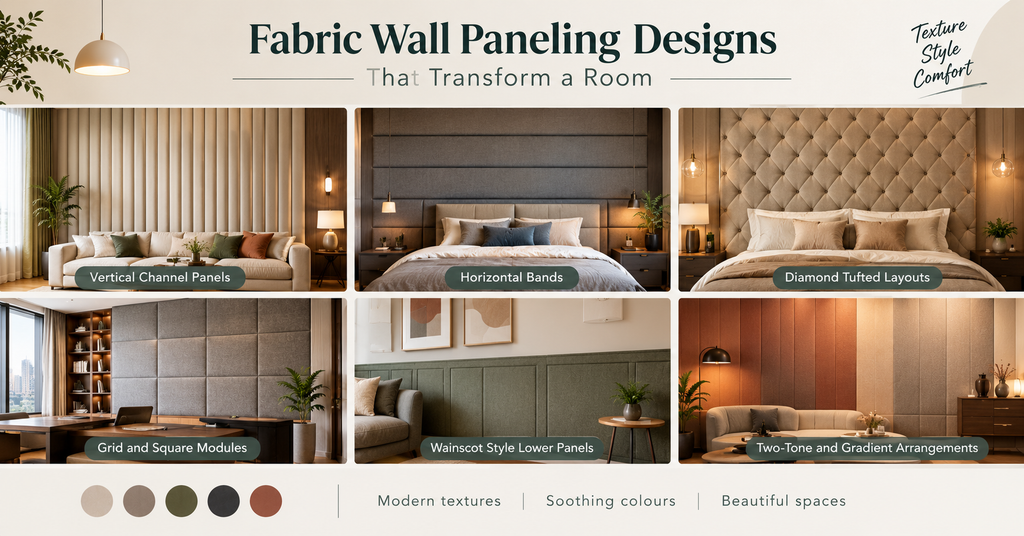
Choosing the right layout matters as much as choosing the right material. Fabric wall paneling designs range from quiet and classic to bold and contemporary, so you can match them to your architecture and personality.
- Vertical channel panels: Narrow vertical strips stretch the wall visually and make low ceilings feel taller.
- Horizontal bands: Wide horizontal sections widen a narrow room and create a calm, grounded feeling.
- Diamond tufted layouts: Buttons and pleats form a classic pattern that suits traditional and luxury interiors.
- Grid and square modules: Evenly spaced squares or rectangles give a clean, architectural look that works well in offices and studios.
- Wainscot style lower panels: Fabric covers the lower half of the wall, and paint or wallpaper covers the upper half, which protects the wall and adds a layered look.
- Two-tone and gradient arrangements: Panels in related shades create depth and movement, especially when soft lighting washes across them.
Modern fabric wall panels lean towards minimal lines, neutral palettes such as beige, olive, charcoal and muted terracotta, and slim concealed joints. Designers often pair them with warm LED strips, wooden slats or stone textures so the room feels layered and calm rather than busy.
Using Fabric Wall Panels in the Bedroom
The bedroom is where a fabric wall panel earns its place most clearly. Fabric wall panels for bedroom use create a hotel-like headboard wall that is soft to lean against, quiet to sleep beside and visually rich. A full height panel behind the bed, in a muted velvet or linen, makes the room feel cocooned and peaceful. The acoustic benefit helps too, because it reduces noise travelling from corridors, neighbouring flats and street traffic. For best results, choose calming colours such as dusty blue, sage, warm grey or soft taupe, and add indirect lighting above the panel to highlight the texture. If you share the room with children or pets, select a tightly woven, stain resistant fabric that tolerates occasional cleaning.
Choosing the Right Fabric and Core
Selecting materials wisely protects your investment. Start by checking the fabric’s rub count, which measures abrasion resistance, and prefer a higher number for busy rooms. Pick a flame retardant or treated textile for kitchens, theatres and commercial areas. Match the core to the purpose, using dense mineral wool for strong sound absorption and lighter foam for purely decorative walls. Consider humidity as well, since coastal and monsoon-heavy regions need moisture resistant boards and a sealed back to prevent mould. Finally, order a small sample, view it under both daylight and evening lighting, and confirm that the colour and texture please you before committing to the full wall.
Installing Panels with Clips and Frames
Fixing method decides how neat the finish looks and how easily you can maintain the wall later. Fabric panel wall clips, often called Z clips or hanging cleats, are the favourite choice of professionals. One half of the clip attaches to the back of the panel, the other half to the wall, and the two lock together so the panel sits flush and hides all fixings. This system lets you remove a panel for cleaning, repair or replacement without damaging neighbouring sections. Other methods include construction adhesive for lightweight panels, screw fixing through a hidden flange, and track systems for large commercial installations. Always mark a level line first, locate wall studs or use appropriate anchors for masonry, and leave a small expansion gap of one or two millimetres between panels so the layout stays neat.
How to Make Fabric Wall Panels at Home
If you enjoy hands-on projects, learning how to make fabric wall panels is simple and affordable. Follow these steps.
- Measure and plan: Mark the wall area, decide the panel size and sketch the layout. Panels of 60 by 120 centimetres are easy to handle.
- Cut the base: Use MDF, plywood or rigid insulation board, and cut each piece to size with clean, square edges.
- Add padding: Glue a layer of high-density foam or acoustic wadding on the face of the board and trim the excess at the edges.
- Wrap the fabric: Cut the textile at least five centimetres larger than the panel on every side. Lay it face down, place the board on top, and pull the fabric tight around the edges.
- Staple and finish: Fix the fabric to the back with a staple gun, working from the centre of each side outwards, and fold the corners neatly like a gift wrap.
- Attach the hardware: Fit the clip, cleat or hanging bracket on the back of each panel.
- Mount on the wall: Fix the matching clip to the wall, hang each panel, and align the edges for a seamless finish.
Care and Maintenance Tips
Fabric walls stay beautiful with a little regular care. Vacuum the surface gently once a month using a soft brush attachment to remove dust, and blot spills immediately with a clean, dry cloth instead of rubbing. Test any cleaning solution on a hidden corner first, and keep panels away from direct sunlight, which can fade delicate dyes. Because the panels are modular, you can replace a damaged section quickly, which saves money over time.
Ready to Upgrade Your Walls?
Ready to plan fabric wall panels that suit your home? Explore more practical interior design guides, room ideas and home styling tips at FactIndia. Browse our latest articles and find simple, useful ideas to make every space feel comfortable, balanced and truly yours.
Frequently Asked Questions
1. Is a fabric wall panel good for soundproofing?
A fabric wall panel improves sound absorption and reduces echo, but it does not block noise completely. For true soundproofing, combine it with dense boards, sealed gaps and proper insulation.
2. How long does a fabric wall panel last?
With good fabric and regular care, a panel lasts ten to fifteen years or more. Quality cores and secure fixings also extend its life.
3. Can I install fabric wall panels in a rented home?
Yes. Clip based and freestanding systems cause minimal damage, and you can take the panels with you when you move.
4. Are fabric wall panels safe for kids and pets?
Yes, if you pick low-VOC materials and tightly woven, stain resistant fabrics. Avoid loose weaves that pets can snag.
5. Do fabric wall panels attract dust or pests?
They collect light dust like any soft surface, but regular vacuuming and a dry, ventilated room keep them clean and pest free.
6. How much does a fabric wall panel cost in India?
Prices vary by fabric, core and design complexity, so request a quote based on your wall size and finish preference.




[…] Also Read- Fabric Wall Panel: A Complete Guide to Types, Designs and Installation […]